

Protecting Wine Quality Through Clarification and Stabilizing Filtration
Winemakers carefully manage the alcohol levels, oxygen content, and pH in wine to foster the growth of beneficial bacteria and yeast that contribute to the creation of exceptional wine. Simultaneously, they inhibit the growth of organisms that could spoil the wine. This intricate balancing act unfolds from the grape harvest through the fermentation and aging phases of wine production. Once the aging process concludes and the bacteria and yeast have fulfilled their role, it becomes imperative to remove them, along with any remaining particulates, and then stabilize the wine. The stabilization process is of utmost importance, as it significantly impacts the wine’s shelf life and long-term quality.
Wine Clarification
Clarification, as the name suggests, involves removing cloudiness from wine by eliminating fine particles that remain after fermentation. Fermentation produces various suspended particles, yeast cells, and other microbes that give the wine a cloudy appearance.
There are several methods for clarification:
- Sedimentation: Allowing the wine to sit undisturbed so that heavier particles settle at the bottom. Then, carefully removing the clarified wine without disturbing the sediment.
- Fining: Adding agents that act as flocculants, causing smaller particles to clump together and settle out faster.
- Centrifugation: Spinning wine at high speed, where centrifugal force separates the solids from the liquid.
- Filtration: Passing wine through a carefully selected porous medium to retain particulates while allowing the clarified wine to pass through.
Among these options, filtration is typically the fastest and often the most economical method.
Wine Stabilization
Stabilization involves removing smaller particulates and organisms, such as yeast and bacteria, that can spoil the wine after bottling and negatively impact its flavor and character. Filtration is an effective choice for this purpose, as it allows for the specific removal of unwanted materials without affecting the wine’s flavor or color. While other stabilization methods, such as heat and chemicals, exist, filtration offers a faster, more controlled process that can be combined with clarification into a single treatment step before bottling. Although this typically requires a two-stage filtration setup, as illustrated in Figure 1, this process can seamlessly transition the wine from the fermentation vessel to the bottling stage.
Clarification and Stabilization Filtration
The two-stage filtration process depicted in Figure 1 is designed to be efficient and maximize throughput. The initial filter (housing 1) may contain a depth media filter with a pore size rating of 3 or 5 microns. This filter effectively captures larger particles and sediment, thereby safeguarding the second depth filter, which may have a pore size rating of 1 micron, from becoming overloaded with particles and prematurely clogging. This combination enables the processing of more wine and can lead to reduced overall clarification filter costs.
Some winemakers may opt to utilize only one filter, contingent upon the level of particle and organism content at this stage of the process. Critical Process Filtration collaborates with winemakers to determine whether a single-stage or multi-stage system yields the best results in the most cost-effective manner.
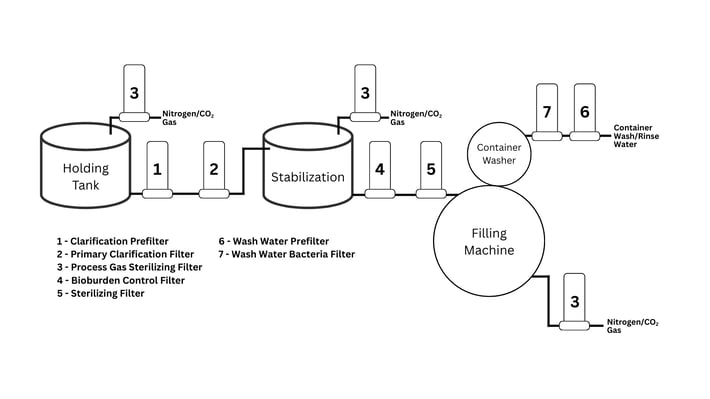
Figure 1: Filter Process Wine Clarification and Stabilization
Choosing Filters for Clarification
Depth filters are crafted from media that undergoes melt-blowing or spinning-bonding into continuous polymer fibers. These fibers are then formed into either a thick tube or a flat sheet. The most commonly used materials for depth media are polypropylene and fiberglass.
Standard depth filters are created by forming the fibers into tubes with thick walls using the melt-blown process. These filters capture particles through the depth of the media. The clarification prefilter (housing 1 in Figure 1) is likely to accommodate a standard depth filter. Polypropylene is the most prevalent material for standard depth filters, although other materials are occasionally employed for specialized applications.
Melt-blown media offers superior efficiency compared to other types of depth filters, such as yarn-wound filters. As the name implies, yarn-wound filters are constructed by winding yarn around a core. The yarn can shift and create channels for liquid to flow through without being filtered. In contrast, melt-blown filters consist of continuously bonded fibers in self-supporting tubes that do not require a core. These filters are generally more efficient and easier to dispose of once used.
The primary clarification filter (housing 2 in Figure 1) is likely to be a pleated filter made using flat sheet media of polypropylene or fiberglass fibers. The flat sheet media is pleated to increase surface area. With the enhanced surface area, these filters can capture and retain a larger quantity of particles.
Depending on the nature of particles and organisms present in the wine, housing 2 could also serve as an initial stabilization filter.
The size and number of particles in the wine determine the appropriate filter pore sizes and the number of filters required. The initial stage of clarification could be designed to remove a significant number of particles.
Particles with sizes exceeding 5 microns are often found in sediment that has settled from wine. While individual particles smaller than about 20 microns are not visible to the naked eye, they become visible when they either clump together or settle to the bottom of a container. Using a 5 or 10 micron rated filter as the Clarification Prefilter can effectively remove most of these particles during the initial clarification stage. Alternatively, the Primary Clarification Filter can serve as a secondary particle filter or be chosen as the first filter to remove microorganisms and initiate the biological stabilization process. If the winemaker opts to use this filter solely for particle removal and haze reduction, a 3 or 5 micron pore size rating is sufficient. However, if the Primary Clarification Filter is also intended to begin the biological stabilization of the wine, a 1 micron or 2 micron rated filter will remove yeasts and certain bacteria that may have entered the process.
Choosing Filters for Stabilization
The final microbial stabilization is achieved by passing the wine through the bioburden reduction filter (housing 4) and then the sterilizing filter (housing 5). Similar filters are also used for washing and rinsing containers (housings 6 and 7) to prevent the introduction of organisms from the wash water. Additionally, it’s crucial to consider process gas and/or tank vent filters (housing marked 3 in Figure 1) to prevent particles and organisms from entering the process through the gas.
The most critical filter in Figure 1 is the final stabilization filter (housing 5), which removes the microorganisms discussed earlier. The most commonly used filter is membrane-based with either a 0.65 or 0.45 micron pore size rating. These filters effectively remove both bacteria and yeasts. Winemakers may opt for the smaller pore size to ensure the capture of all bacteria, including the vegetative forms of some species that may survive in wine. However, there’s a risk that some flavor or color elements may also be captured by membranes with 0.45 micron pores. Therefore, 0.65 micron membranes may be used for red wines. Before selecting a micron rating or material, winemakers should test the filters to ensure they effectively remove the target organisms while preserving the wine’s flavor and color.
The system depicted in Figure 1 features a single filter preceding the final stabilization filter (housing 4). This filter, known as a bioburden reduction filter, plays a crucial role in regulating the quantity of organisms that need to be captured by the final filter. As previously mentioned, clarification filters can also contribute to the stabilization process by removing certain microorganisms. However, the bioburden reduction filter is specifically designed to extend the lifespan of the final sterilizing filter. Winemakers and plant operators meticulously assess the size and number of particles and organisms present in the wine, subsequently selecting the appropriate filter to eliminate particles and larger organisms that could potentially prematurely clog the final filter. The bioburden reduction filter is typically a membrane-based filter with a pore size rating ranging from 0.65 microns to 1.2 microns. The chosen filter is engineered to capture most, but not all, spoilage organisms, thereby reducing the bacterial load that must be removed by the final filter. In certain cases, operators may opt to incorporate a filtration step at this stage, particularly when the particle load is substantial. If a two-stage clarification and bioburden reduction process is implemented, it generally involves a depth media filter for particle reduction followed by a membrane filter to further reduce the bacterial load.
The process gas and vent filters are typically equipped with 0.22 micron hydrophobic filters. These filters are designed to effectively eliminate any bacteria and particulates that may be transported by the process gas or drawn in from the surrounding environment during the emptying of tanks.
Summary
The filters selected for each step in the process must be designed to function after the disinfection or sterilization process. Additionally, the organisms targeted for removal must be considered. Critical Process Filtration offers a wide range of filters, including cartridge filters, disposable capsule filters, and flat disc filters for laboratory-scale testing.
Are you interested in exploring your options for a filtration system to clarify and stabilize your wine? Our Applications Engineers can assist you in identifying the appropriate filters and suggesting a filter train that can streamline your clarification and stabilization processes. They can also recommend testing, either in our lab or at your facility, to ensure you select the right filters at an economical price. For more information please visit our Application Summaries and Buying Guides, or contact the Critical Process Filtration Technical Service team at Technicalservices@criticalprocess.com.
For further information, please refer to our literature:
Buying Guide: Filter Options for Wine Clarification and Stabilization